Mirador del Roque de los Muchachos
Night
Position your tripod on the stone wall railing to capture the caldera's depth against the night sky.

Roque de los Muchachos sits at 2,426 meters on La Palma's highest ridge, home to the Gran Telescopio Canarias and one of the world's three premier astronomical observation sites. The visitor centre provides context for the observatory complex, though telescope interiors remain restricted to research teams. This guide covers access logistics, what the public facilities offer, and how to plan your visit to the summit.
Quick answer
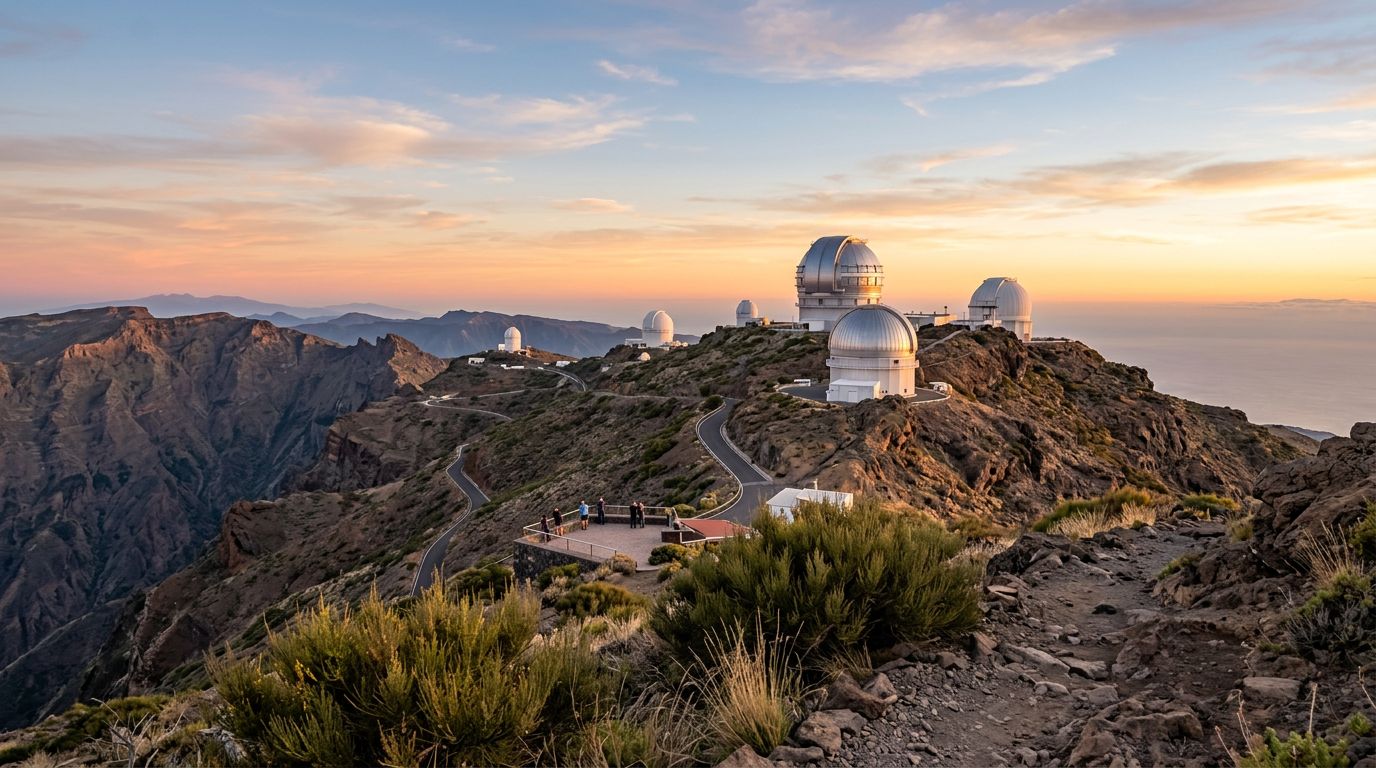
The Roque de los Muchachos visitor centre opens 10:00–17:30 daily, with 15 EUR standard adult entry covering exhibits on astrophysics research and observatory operations. Arrive between 10:00–16:00 to avoid afternoon cloud inversion and ensure safe daylight navigation of the mountain road. The site offers exterior views of thirteen operational telescopes, interpretive displays on cosmic phenomena, and unobstructed horizon views across the Caldera de Taboada, though active telescope domes remain closed to the public.
The Roque de los Muchachos observatory cluster operates thirteen major telescopes across a plateau where atmospheric stability and minimal light pollution create observation conditions matched only by Mauna Kea and the Atacama Desert. The Gran Telescopio Canarias, with its 10.4-meter segmented mirror, ranks as the world's largest single-aperture optical telescope, though visitors view only its distinctive white dome from designated pathways. La Palma earned Starlight Reserve certification in 2012, the first European territory to meet International Dark-Sky Association criteria for astronomical heritage protection. Island ordinances limit artificial lighting across the entire landmass, maintaining sky darkness that allows naked-eye observation of the Milky Way core structure and zodiacal light phenomena rarely visible from continental Europe. The visitor centre at Crta. LP-4, Km 37 translates this research context for non-specialists through scale models of gamma-ray detectors, spectrographic equipment, and the MAGIC telescope array that captures Cherenkov radiation from distant stellar events. Night access to the summit remains restricted outside organized astronomy programs, as active research sessions require absolute darkness and vibration control. The daytime visitor experience focuses on understanding how altitude, atmospheric transparency, and geographic isolation combine to make this ridge scientifically irreplaceable. Exterior walkways circle the William Herschel Telescope and Swedish Solar Tower, with interpretive plaques explaining adaptive optics systems and interferometry techniques in plain language. The mountain road from Villa de Garafía climbs 1,800 vertical meters through pine forest and alpine shrubland before breaking above the cloud layer. Afternoon thermal updrafts often push condensation over the rim between 14:00–18:00, obscuring views and creating hazardous driving conditions on the descent. Morning visits guarantee clear skies and allow time to explore the adjacent Mirador de los Andenes, where the caldera drops 1,500 meters in a single escarpment. Public telescopes operate at the visitor centre for solar observation during opening hours, projecting real-time images of sunspot activity and coronal loops onto viewing screens. Staff astronomers conduct brief orientation talks at 11:00 and 15:00, contextualizing the observatory's role in exoplanet detection and cosmic microwave background mapping without requiring prior astrophysics knowledge.
“La Palma's sky darkness allows naked-eye observation of Milky Way core structure and zodiacal light phenomena rarely visible from continental Europe.”
The Roque de los Muchachos Visitor Centre operates on a consistent daily schedule throughout the week to accommodate visitors interested in the observatory site.
The Roque de los Muchachos Visitor Centre is located at the highest point of La Palma. The most direct approach is via the LP-4 road, which winds through the mountains to reach the summit area.
LP-4 road to Km 37
LP-4 road to Roque de los Muchachos
Navigate to Crta. LP-4, Km 37, 38728 Villa de Garafía, La Palma, Spain. It is essential to complete your journey during daylight hours to safely navigate the mountain roads before the evening stargazing period.
Preparation for high-altitude stargazing ensures a comfortable experience while observing the night sky at Roque de los Muchachos.
Temperatures drop rapidly after sunset, often reaching near freezing even in summer, so bring a heavy jacket, gloves, and a hat.
The summit elevation exceeds 2,400 meters, which can cause lightheadedness; move slowly, avoid strenuous activity, and drink water consistently to stay hydrated.
Use a red-light flashlight to navigate without affecting your eyes' adaptation to the dark, which takes approximately 30 minutes to fully achieve.
If bringing a camera tripod, ensure it has a wide base or a hook for added weight to prevent it from tipping in the strong mountain winds.
The terrain around the observation points consists of loose volcanic rock and uneven paths; sturdy, closed-toe walking shoes are necessary for safety.
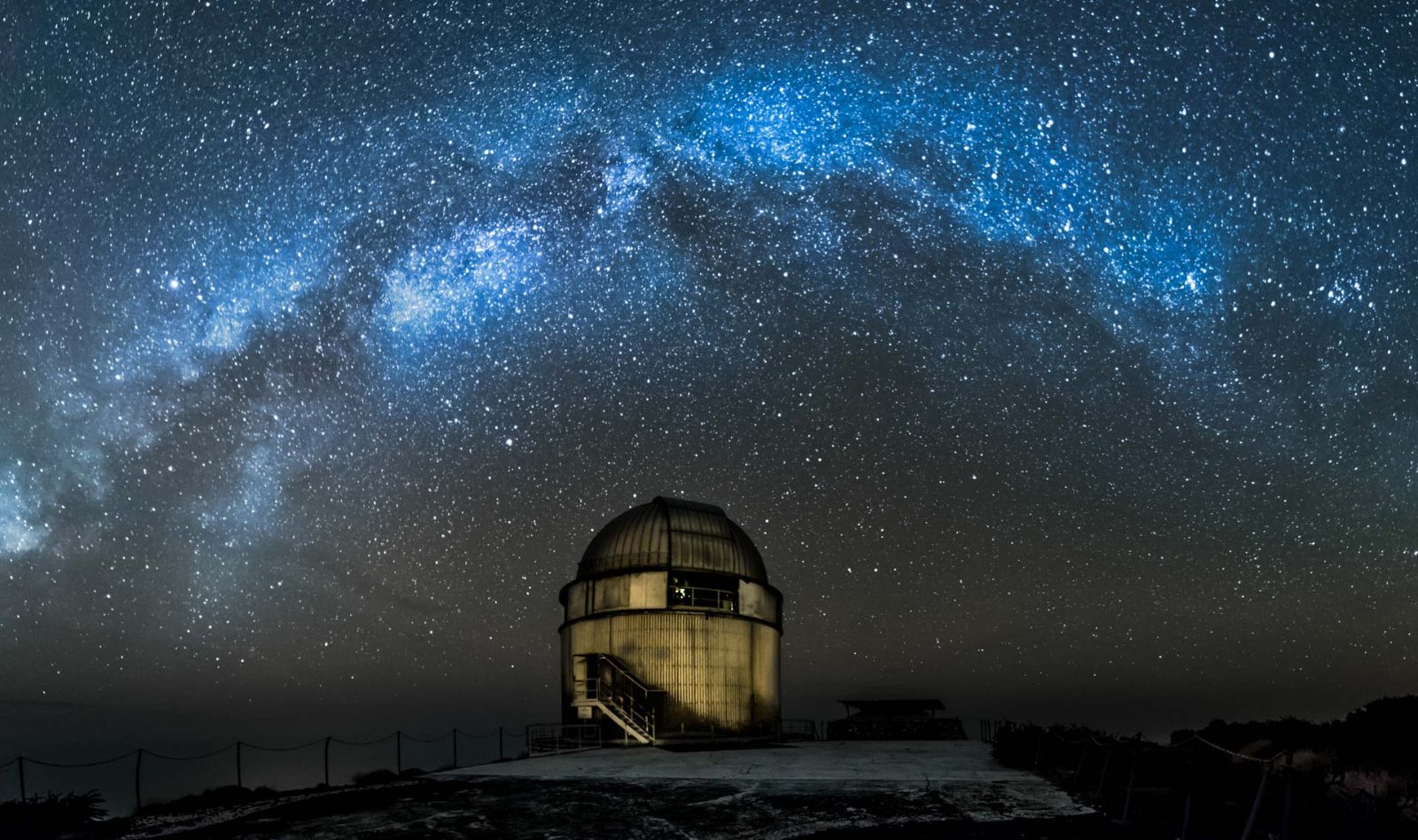
Night
Position your tripod on the stone wall railing to capture the caldera's depth against the night sky.
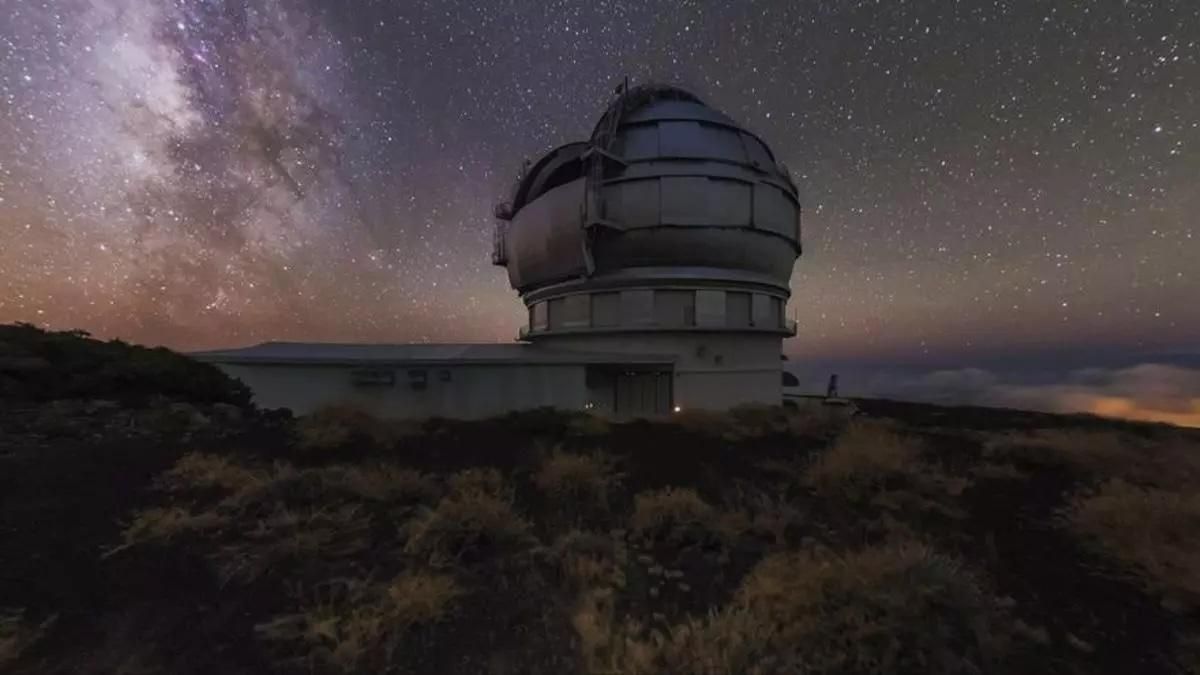
Night
Frame the telescope structure with the Milky Way directly overhead or behind the dome.
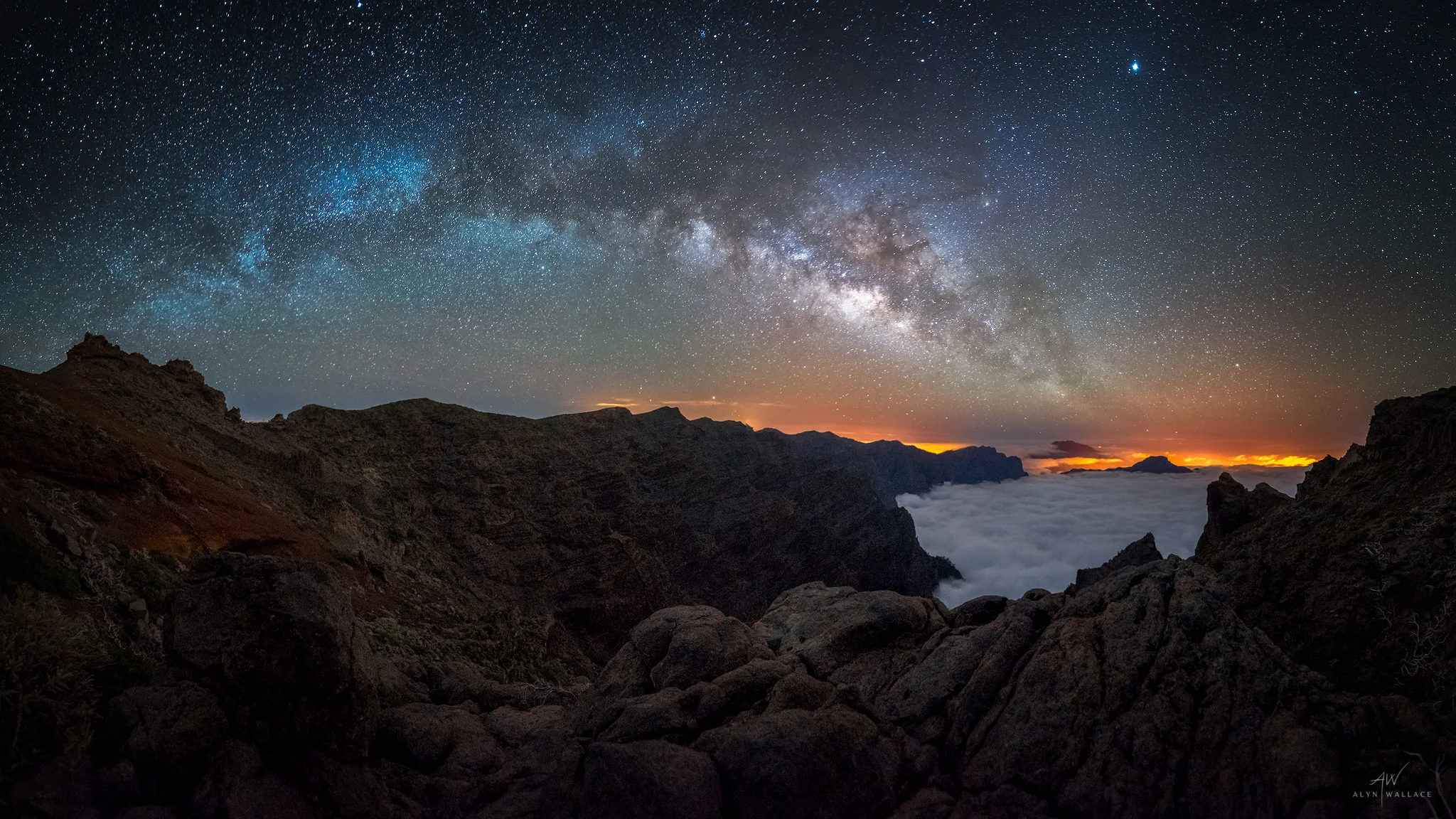
Sunset and night
Use this viewpoint for panoramic shots of the ridge line and the sea of clouds below.
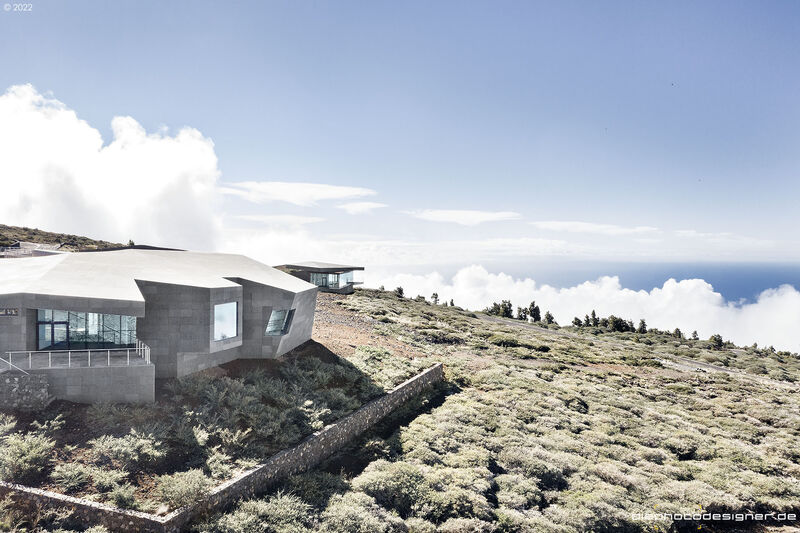
Twilight
Focus on the architecture against the twilight horizon before the full onset of darkness.
Everything you need to know about roque de los muchachos stargazing
To enjoy roque de los muchachos stargazing, travelers often combine a daytime visit to the observatory facilities with an evening excursion led by professional guides. Navigating the mountain roads requires caution, so planning your route in advance is essential. Watching the night sky from this altitude offers one of the clearest celestial views in the Northern Hemisphere.
Yes, you can include the visitor center in your roque de los muchachos stargazing itinerary. The center provides context about the various telescopes and scientific research conducted at the summit. Please verify the opening hours before your arrival to ensure the facility is accessible during your trip.
Standard adult entry for the visitor center is 15 EUR. This fee supports the maintenance of the facilities and the educational programs offered on-site. Visitors planning a roque de los muchachos stargazing experience should factor this cost into their travel budget.
The best arrival window for your mountain visit is 10:00–16:00. Arriving within this timeframe helps avoid peak afternoon clouds and ensures you have sufficient daylight for safe navigation of the mountain roads. Prioritizing this window makes your journey more comfortable and predictable.
Children are generally welcome to participate in nocturnal sky observation tours, though the high-altitude environment and late hours require preparation. Ensure that minors are dressed appropriately for the drop in temperature that occurs after sunset at the summit. Always check with specific tour providers regarding age restrictions or requirements for their individual programs.
Visitors should remain on marked paths and respect the restricted zones surrounding the scientific telescopes. High-altitude environments can be physically demanding, so monitor your health and hydration levels closely throughout the day. Following site guidelines ensures that the professional research carried out at this world-class observatory remains undisturbed.